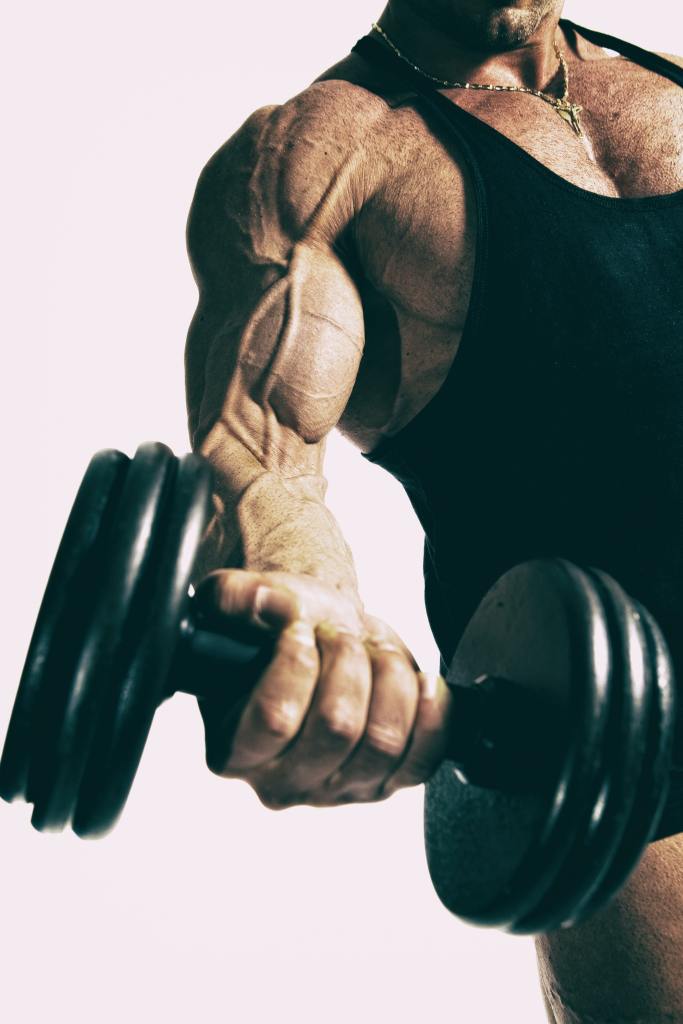
Answering the question of the decade || Can you build a physique without supplements?

Can you build a physique without supplements? The debate on this topic will never end. But here are my opinions on the same, that will help you form some clear views.

If we try to understand what are the building blocks of muscles and why do muscles grow in the first place, we will pretty much get a rough idea on our topic. So, muscles are basically protein and water. So, for a muscular hypertrophy to occur at the first place, the body needs protein and water in abundance and a reason to grow, that’s the stimulus. The stimulus can be any physical strain like lifting weights that creates micro tears in the muscle fibres. These micro tears in the muscle fibres are repaired by the body and the body also ensures to prepare the muscle for the same stress in future to prevent similar damage further, hence increasing its size and strength.

So, building a physique without any supplements is quite achievable. You can achieve your protein goals from whole food sources. So, supplement are not a necessity when it comes to muscular hypertrophy. Now, we know the answer to our question but the next thing that arises is, should you build a physique without supplements?
Building a physique without any supplements is quite achievable.

In my personal opinion, it depends. Supplements(we’re taking natty supplements into consideration only), as the name suggests are substances that are an add-ons or extras that help you improving the overall performance and bodily functioning. The whole purpose of supplementation was to provide the body with items whose needs were not fulfilled by whole foods completely. So, if you have budget for supplement, why wouldn’t you like to use them to optimise yourself to the maximum potential. In fact, supplements like creatine are actually beneficial in increasing strength after prolonged use. Many supplements like multivitamins, Omega 3 fatty acids in correct doses can actually help you optimise your diet better.

If you have budget for supplement, you would like to use suppliments to optimise yourself to the maximum potential.

Now, can achieve your dream physique with natty supplements, supplements that we use generally like protein, creatine, omega 3s, pre-workout etc. The answer is no. Even with all suitable hypertrophy conditions, you’ll grow till your genetic potential and no further. To go beyond your genetic limits, you will need to use performance enhancing drugs like steriods and sarms. Now, the effectiveness of these PEDs will again depend on your genetics, how good will your results be from the use of a drug or the side effects it will have on your body will all be determined by your genetics to a great extent. So, even with PEDs, that are effective but with tons of side effects, an average person like us, will most likely never reach their dream physique.

If you want to read about the human body’s natural muscle building potential and about realistic muscle building expectations, check out my article on the same: https://chiru.fitness.blog/2020/11/29/realistic-expectations-for-natural-lifters-and-knowing-all-about-your-body-type-the-most-basic-yet-the-most-important-concept-for-a-successful-fitness-journey/


The Diet of your dreams || How to use macro-nutrients to your advantage to put together food items you enjoy? || Reaching the Dream Physique and maintaining it year round

Let’s say, we have the most aware and hardworking person. The guy works his ass off for achieving his dream physique and he is smart enough to figure out the most realistic and achievable physique for himself with a body fat percentage of 10-15 percent, that can easily be maintained year round. He started from somewhere around 20 percent when he decided to diet down and fortunately he achieved his target body fat, but the problem really started when he couldn’t sustain in that body fat range for more than a month and on the contrary, gained back a couple of pounds more than the very starting point when he went off diet.

Now, a lot of us can relate to the above scenario. We work hard, we suffer while dieting and maybe finally achieve our goal, but couldn’t stay there for long enough. While part of reason for this problem can be blamed on our genetics and our respective set points for our individual body, other half can totally be the outcome of our ignorance and poor choices while dieting.

We work hard, we suffer while dieting and maybe finally achieve our dream physique, but couldn’t stay there for long enough and maintain it year round.

A lot of the weight bouncing back problem after reaching our goal can be solved if we could just be on a diet that we enjoy and can sustain on the same for a lifetime. The slower and the longer, we diet, being in the slightest possible calorie deficit, without suffering and enjoying our food, the more likely it is to not only reach our dream physique but to maintain it year round with ease.

The slower and the longer, we diet, being in the slightest possible calorie deficit, without suffering and enjoying our food, the more likely it is to not only reach our dream physique but to maintain it year round with ease.

Dieting can be fun, if done properly, making smart choices. There are two extremes of our eating habits, eating food that we otherwise hate, something that we do while dieting in general and the other extreme being the food that we love, which is the primary reason why we are dieting because most of these favourites of ours are generally calorie dense items.

Dieting can be fun, if done properly, making smart choices. A simple example can be drinking diet coke(approximately 0 calories) instead of regular original coke that is calorie dense.

On the spectrum of food, our most hated and loved food items being two very extremes, we need to find the middle ground, where we are dieting and making progress without hating our meals and suffering but being satisfied. This can be achieved with ease by making intelligent decision making while selecting the condiments and spices that we use to flavour our food, picking the lowest calorie ones available. Now, with those low calorie alternatives for regular condiments, we can make the food tastier, we need to now only pick for food items that can keep us full for longer time with lower calories to avoid the feeling of starving while dieting. This truly boils down to the selection of macro-nutrients.

Protein and fibre rich food items are the ones that can keep us full for a longer time for the satiating effects. On addition, protein also has a higher thermic effect than other macros, i.e, a lot of calories from protein are actually used and burnt out in the digestion of protein itself. Carbs and fats, on the contrary are fast digesting macro-nutrients than protein but they make the food tastier mostly.

Protein and fibre rich food items are the ones that can keep us full for a longer time for the satiating effects.

So, balanced and well-thought recipe compilations using the right amount of macros can make a low calorie dense and more fulfilling and satisfying combination for our taste buds and gut, making the whole process of dieting, simpler, satisfying and successful at the same time.

Roadmap to the perfect diet for your dream physique || How to put together the diet for yourself? || Make yourself a diet that can be followed everyday

The web has definitely made knowledge, a lot more accessible but with unlimited access, there arises the trouble of misinformation and information overload.

Ever tried searching for best diets, you will get a ton of results, keto diet, intermittent fasting, warrior’s diet, crash diet, liquid only diet, low fat diet and what not. If I am being honest, these humongous amount of information is sometimes way too confusing for understanding how to approach the whole process of dieting according to one’s individual goals.

We need to train hard and yet be in the smallest calorie deficit. So, basically, we are going for something slower, yet effective approach for both fat loss and muscle gain.

Personally, I have been in my weight loss journey for a long time, so the diet discussion of today’s article will mostly be focused specifically towards fat loss and muscle gain simultaneously. Well, now the most obvious question that arises is, can both these opposing processes happen at the same time? To be precise, yes and it can be done by giving the body sufficient stimuli and keeping it in a calorie deficit. In simple words, we need to train hard and yet be in the smallest calorie deficit. So, basically, we are going for something slower, yet effective approach for both fat loss and muscle gain. Now, the number of daily calories for every individual will vary individually, based on the activity levels and daily calorific intake.

After we know about the calorie requirements, now is the time to know about macros. Macros or macronutrients are carbohydrates, fats and protein. Carbohydrates and fats, being the energy sources for essential process of the body, while protein is the building block of the body, basically, this helps in muscle building.

Now, particularly protein is required in a quantity of 1 gram per pound of bodyweight and fats and carbs, according to the limits of daily calorific intake for optimal fat loss and muscle building.

What if one cannot hit the daily macros goal? Well, if one couldn’t satisfy the 1 gram per pound of body weight range, if the person is eating bot fats and carbohydrates in abundance and atleast 0.5 grams per pound body weight of protein, the person can still get away with descent results, as the carbs and fats will have a protein sparing effect. Coming to carbs, if you have a minimal to very low amount of carbs, something like a keto diet, you can still get results, considering that you’re getting fats and protein in abundance. The body will convert the protein into glucose(simpler form of carbs). Fats are something complex, it’s higher in calories than other two macronutrients, however, it’s essential for some major functions of the body. You must consume your daily dose of essential fatty acids like omega 3s. However, you don’t want to overeat fatty foods as they are super high in calories and most probably screw your diet really bad.

We know how to frame a diet for yourself but how do you know if a diet is perfect for you? Well, as simple as it may sound, a diet that you can stick for a lifetime is the perfect diet for you. This will not only help you loose weight, but also will help you keeping the weight away.

A diet that you can stick for a lifetime is the perfect diet for you.

If I am making a diet for me, there will not be any completely restricted food items. A perfect diet will be the one for me, that allows every food item in moderation, this will not only keep one satisfied but also will ensure that the person will stick to the diet for a longer period.

Dieting and clean eating is not the same as eating horribly tasting food || Eat everything you like and achieve your dream physique

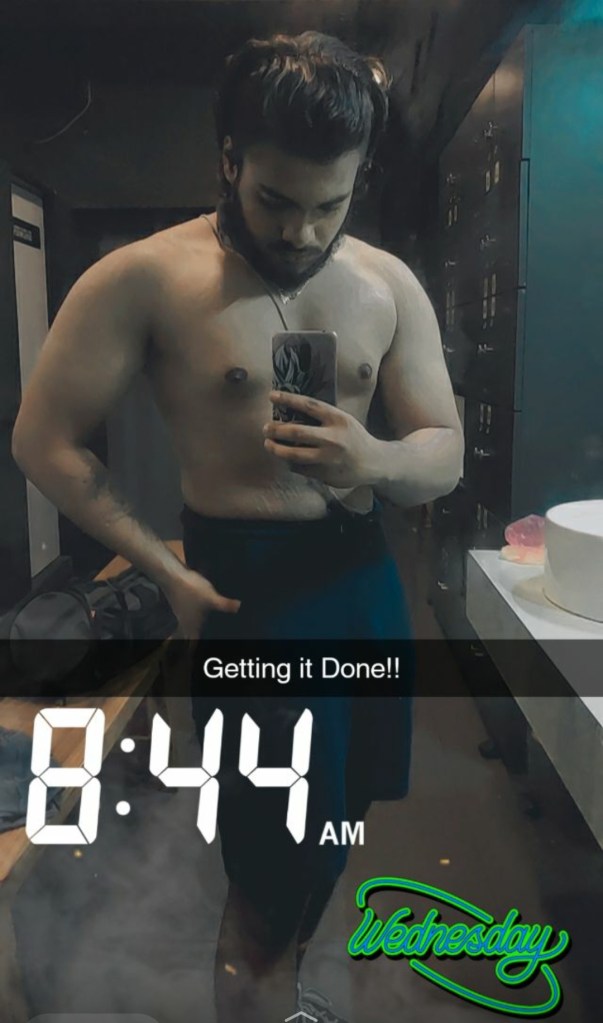
I have been dieting continuously, since the time I started training. Plenty of mistakes, sufferings, until I finally found my myntra to diet the right way. A way where I can eat like a normal person, enjoy everything I like and yet lose weight.

When I first started dieting, I started with Intermittent Fasting and I lowered my daily calorific intake for more than a half of what it used to be, not the smartest thing to do, of course. Specifically, speaking about that phase, my energy levels were nearly zero. I ate, trained and slept. I also lost weight really quick, starting from 98 kgs dropping down to nearly 85 kgs in just 3 months, losing fat and also sacrificing a significant amount of muscle mass at the same time.

After I lost some weight, I actually wanted to slow down the process a bit and also wanted to gain some muscle at the same time. This time, I increased the calories, yet being in a significant 500 calories deficit from my maintenance calories and continued with Intermittent Fasting, adopting a super low fat, low carb and high protein approach. Again, not really the smartest approach. Even if, I got some results, I wasn’t satisfied with the way of eating. Eating boiled foods, the basic chicken, broccoli and rice approach. I hated my meals and desperately waited for weekends to get those cheat meals in. Honestly, this felt like a torture.

After this phase, covid-19 came in, gyms were shut and we were stuck at home. I continued with some home workouts, eating whatever was cooked at home. This time, I gained some weight. I gained nearly 9 kgs, but I was satisfied with the way I ate. I enjoyed my food and I wanted the same satisfaction while I go back to dieting again. So, the whole lockdown was dedicated to search for low calorie condiments and spices that can make my food interesting. Luckily, I found a few of them. I tried out different normal recipes, but the only change was, changing the regular condiments with the low calorie ones that I found in the lockdown. So, this time, I am losing weight slower than last time to preserve most of the muscle mass and build some more muscle and lose fat, while enjoying my food.

There are a couple of points, I keep in my head, while making my meals this time. The Protein and the fibre content of the meal should be highest, as they both have higher thermic effect and keeps me full for longer time. Carbs should be added in right amount to stay in the calorie limit, yet bring in taste. Fat from oil must be avoided, as it adds up to total calorie intake and contributes the least to keep me full.

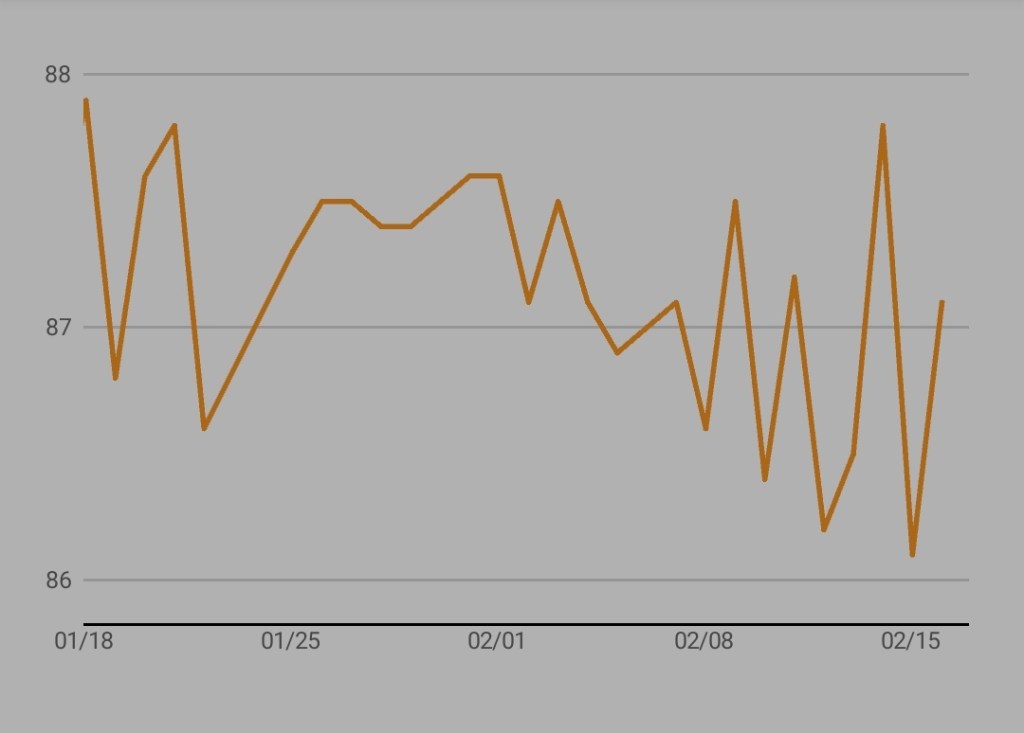
Weight vs Time Graph for a Month, tracking my monthly progress.

I don’t have significant changes as my results but I have my weight and time graph for a month. I have been doing this and getting some good results, being happy and satisfied with whatever I eat. At the end, dieting is not eating boiled food, but making smarter choices to enjoy the food, while making progress.

You can never count calories accurately. Here’s why?

We all know, calories in and calories out, together is what helps us get our dream physique. If one is losing weight, calories in must be lower than calories out and vice-versa for anyone gaining weight, but why do most of us fail to reach our goal, if the mantra is that simple. Where are we going wrong?

Calories in and calories out, together is what helps us get our dream physique.

Well, the answer is we are counting calories wrong and I am not here to tell you, it’s your fault, because it’s not. Practically, no one can track calories accurately.

We are counting calories wrong.

Have you seen labels on food packaging that says 1 cup serving size or 1 tablespoon or teaspoon serving size? They provide the nutrition table according to that serving size. Now, the cup, the tablespoon and the teaspoon weight is considered different in different countries. So, the nutrition label on the packet becomes insignificant with these differences in these relative measurements methods across the world (However, if the serving size is mentioned in grams, the accuracy improves significantly.)

It’s difficult to track calories of items like bread, cheese slices and similar items. Every slice of bread and cheese are different in size and width. Even if you know, the total calories of the pack and can weigh out every slice to find the right calories per slice but it just too impractical and time consuming for me. Many people simply use apps like myfitnesspal or similar apps to track calories and macros which makes approximate estimations to track daily calorie intake and thus, compromises some accuracy along with it.

It’s difficult to track calories of items like bread, cheese slices and similar items. Every slice of bread and cheese are different in size and width.

Lastly, even if you track everything right. You do all the calculation manually, you can still be incorrect, considering the fact that labels lie. This is somewhat of a marketing gimmick used by companies. There are a lot of companies, that shows less calories per serving than in real. If lower calories per serving is mentioned, the sales will go up because people will be more willing to buy it.

Now, this article is not to discourage you to track calories. It’s just that you need to know, we are just tracking it with significant approximations, so the total calorie intake that you track is always somewhat incorrect. So, along with tracking calories, it’s important to track your weight daily and measure the weekly progress. Along with daily weight check in, use the mirror to track your progress.

All about Anabolic Window- Truth or Myth?

Have you ever heard bodybuilders and some fitness influencers talking about getting your nutrients, in less than a 60 minutes after your workout? They refer it as the ‘Post Workout Anabolic Window’. Some bodybuilders even take things to extreme to claim that if you don’t get your nutrients in between the 60 minutes period after the workout, the workout is a waste. We are going to discuss all about it, is it correct information or is it some myth and bro science in the fitness industry.

To understand this, we need to understand why did the term even exist. Before that I want you to know two terms: anabolic, the muscle protein synthesis state or the muscle repair process in layman’s terms and catabolic, the muscle breakdown state or the muscle damage state.

In our workout, specifically strength training, we bring in some stimuli that results in micro tears in the muscles. So, basically workouts are catabolic. After the workout is over, once we get the required nutrients for our recovery, we go in an anabolic state and muscle protein synthesis starts to repair the muscle and prepare it to face similar stimuli from workout with minimal damage, the next time. Now, the term, ‘Post Workout Anabolic State’ exists because of the claims of better nutrition absorption immediately after the workout.

In our workout, specifically strength training, we bring in some stimuli that results in micro tears in the muscles.

Is higher nutrition absorption claims in the Anabolic Window even real?, this is where we are actually stuck. Well, according to studies conducted regarding the same, it was found that the ‘Anabolic Window’ does exist, however it is significant for competitive athletes in bodybuilding and not for average person like us.

These studies also show that the total daily intake of protein gives the similar results as the protein intake done during the Anabolic Window and the total daily protein intake is actually more important than the amount of protein consumed during the Anabolic Window. Now, to understand this, we need another conclusion from these studies, the muscle protein synthesis is elevated upto 48 hours from the training session. The body can actually absorb an certain amount of protein at a time, not more that 30 grams from a meal for an average person. So, even if you eat a load of protein during the Anabolic Window, most of the protein isn’t available for the body at the first place. However, if you provide the body with constant protein rich meals spread throughout the day, the body will use more protein for muscle repair because of the elevated muscle protein synthesis from the workout itself. This is why, the total daily protein intake becomes more significant than the anabolic window protein intake.

The total daily protein intake is more significant than the anabolic window protein intake.

Now, slightly deviated from the claims made by the bodybuilders, the Anabolic Window is not actually as short as 60 minutes but last for 3-4 hours after the workout. However, it can actually increase depending on the pre-workout meal. If the pre workout meal already had descent amount of protein in it, then the body will have some aminos reserved from the pre-workout meal for muscle repair after the workout and it can also use it for muscle repair during the workout (however, workout is still a catabolic process, because rate of damage is higher than rate of repair) and in this case, the anabolic window can even extend to nearly 6 hours after the workout, depending on the available amino acid quantity.

Blog at WordPress.com.

Up ↑

Design a site like this with WordPress.com
Get started