6 Principles of Strength Training, You must know to Reach your Fitness Goals

Strength Training is definitely your weapon of choice, if your goal is to improve either with muscular strength or muscular hypertrophy. But what if you’re losing some results because of minor mistakes in your training protocol.

The following are the Principles of Strength Training that you must keep in mind, when you get into Strength Training to optimise your results:

1. Principle of Specificity: This is broadly about training specifically for a particular goal. The way one trains for improving muscular strength is not same as the training style for muscular hypertrophy. Even if one selects the same set of exercises and movements for both the goals, there will still be certain parameters that will be needed to be optimised specific to the individual’s goals. Parameters like Rep Ranges, Rest Periods between sets, weights used for sets will be varied for different goals(i.e different for strength and hypertrophy).
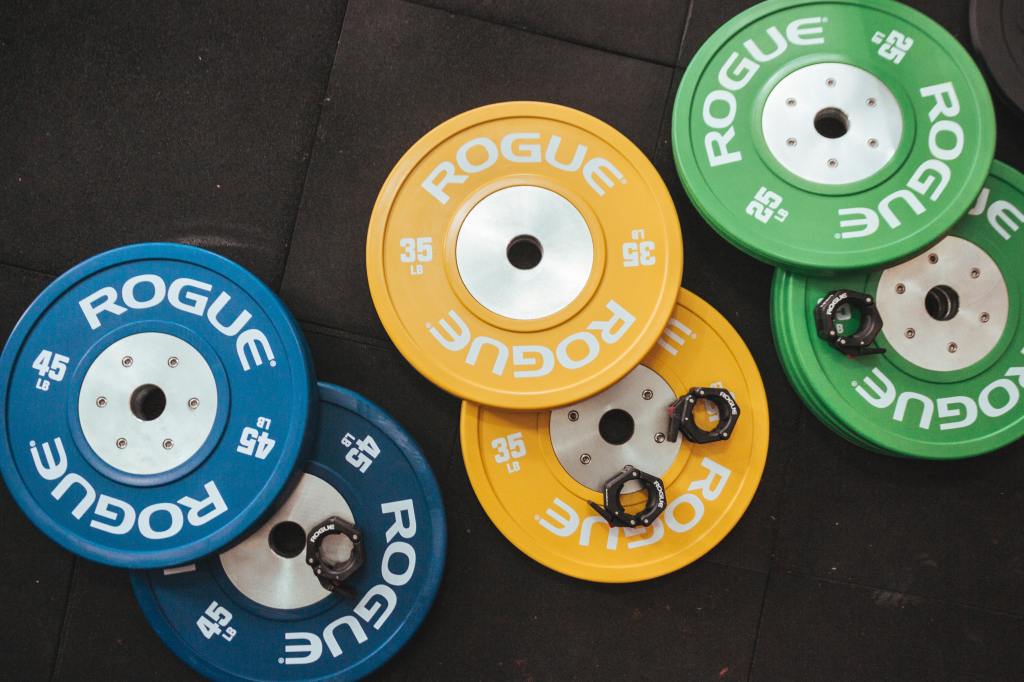
Parameters like Rep Ranges, Rest Periods between sets, weights used for sets will be varied for different goals(i.e different for strength and hypertrophy).

2. Principle of Individuality: A training protocols, even when two different individuals are working with similar intensity and follow the same diet plans will not bring out same results for both the individuals. Two different individuals can have different biomechanics, different genetics, different somatotypes and different physical conditions at the same time. To explain this, we consider two different persons X and Y. X is genetically gifted with great biceps and shitty genetics for calves and Y is genetically gifted with calves but has shitty genetics for biceps. They both get 6 working sets of both the muscles in a week. The results will be, X will see a better growth in his biceps and poor results for calves and vice-versa is true for Y. So, even if they both follow the same program, the results are quite different. In addition, X can require more intensity than Y for calves to match the results of Y and Y may need more intensity than X to bring in similar results as X when it comes to biceps.

3. Principle of Progressive Overload: In the layman’s terms, it just says to build up for greater challenges with time. This can be done by gradually increasing the level of challenges during your training. Improvements with Strength Training can only be dynamic and progressive when one continuously increases the intensity of workouts. This can either be done by increasing the resistance keeping the rep range constant, or by increasing the rep range keeping the resistance constant, or by increasing the number of working sets performed for a particular exercise in a workout session, or by decreasing the rest periods between the sets, or by simply increasing the Time under Tension during the sets.

Principle of Progressive Overload is the key to improve with time using Strength Training

4. Principle of Variation: If you’re someone who follows fitness and fitness related content on the web, I am sure you must have heard this line, “Our body is smarter than we think.” and honestly I cannot agree more. If one trains under a particular training regime for years, they will see stagnant results and no progress eventually. The body adapts to the challenges of the training protocols with time and now doesn’t even consider it as a challenge, hence it doesn’t have a reason to progress further. To avoid this, we bring in minor changes like changing training cycles (switching between strength and hypertrophy phases in few months, i.e. Linear Periodisation) or changing in stimuli to avoid a plateau.

5. Principle of Maintenance: There will be a certain limit till which we can push our bodies. If for some reason, we have reached that limit, we cannot progress further, we have to maintain what we have achieved with our hardwork. To maintain and preserve our previous results for a particular fitness component, one must continue with previous training while he can bring in some newer protocols for training other components of fitness and improve in them.

6. Principle of Reversibility: As simple as it sounds, there will be reversal of your progress, even to the very starting point once you discontinue your training. To keep moving forward, we must ensure we are training consistently without fail. So, the next time you take off from your workout sessions, be very clear in your mind, you are surely gonna lose some strength and size. The longer is the break, greater is the loss.


Setting goals the Right Way | Set and Achieve Goals with a Higher Success Rate

Even if planning mostly don’t work with 100 percent success rate in the real world, but it definitely gives you a guiding pathway to achieve your goals. Yet, on the other side, setting goal if done improperly can definitely bring you failure. So, for people who are beginning out with their fitness journey must know how to set and achieve goals, the right way.

Settings Goals can be quite simple and becomes more effective if we introduce ourselves to what I say is ‘SMART’ goals.

SMART Goals is an abbreviated form for Specific Measurable Achievable Relevant Time-bound Goals. Okay, I do get it, that’s a lot of new words to begin with but further explanations will surely help you know more about it.

Basics of Setting Effective Goals in a Nutshell

Any goal that we set, should be quite specific and measurable and by specific and measurable, I mean it should have a particular purpose with a number attached to it. Since, we are a page about fitness, so I am going to talk with respect to goal setting for starting your fitness journey. Let’s say a person is overweight, he knows it because his doctor said him and he didn’t do any measurements by himself. He decides to join a gym to loose weight and sets it as his goal to begin with. By setting such a specific yet immeasurable target, it’s more likely that the person will quit the process halfway in the journey. Whereas, if the person checks his weight, finds that he’s, let’s say 10 lbs overweight and decides to loose it, it’s more likely that he will push himself till he reaches the goal and the success rate definately goes up by adding in a specific purpose and measurable number to the goal.

Alright, let’s say you are ready to start with a specific and measurable goal but if you set your goals beyond your limits, it will only bring you disappointment. We are continuing with the 10 lbs overweight person’s example. The person is ready to loose weight but he decides to loose all of it in a week. Of course, it’s possible but he has to stay in a huge caloric deficit, he has to do hours of cardio, his energy levels will be low and he will be in a bad mood because of continuous ghrelin signals which he keeps avoiding. Instead, if he goes in a slight deficit, where he can function well, start easy with cardio and slowly making his way up and don’t horribly suffer all the time while dieting, it’s more likely that he will achieve the goals. So, knowing your limits is important before setting a goal.

A goal which isn’t relevant with the present situation is the one that will bring no good and in fact it will be bad for you in certain times. Let’s say the person we were talking about, even being overweight, decides to bulk up first to gain muscles and then cuts back the previous 10 lbs and the added fat he has put on during the bulking phase. It’s more likely that he will not be able to reach his goals. He has to diet harder, diet for a longer period and suffer more. So, it’s more likely that he quits halfway into the journey. So, not only did he quit and now is disappointed but also has to start with more than 10 lbs of weight to loose at the first place, in his next attempt and the whole situation just becomes tougher for him. Relevant goal setting is must and not a choice.

Next big thing is the time factor, the last factor that can make or break the game for you. If the person goes in the slightest of deficit to loose weight and decides to loose 10 lbs in a year, he may get impatient in the mid and just get frustrated and quit. On the other hand, if he decides to loose the 10 lbs weight in a period of 3 months(12 weeks), he actually goes for less than 1 lbs weight loss per week rate, which is in fact a correctly decided time frame and can be done with ease. The time period is also short, so it’s more likely to be achieved.

Now, we understand how to set goals or set SMART Goals with higher success rates but when it comes to fitness, it is something that needs to be done for lifetime. So, it’s important that we actually enjoy the process while working towards our goal to actually develop it as a habit and continue doing it even if our goal is achieved.

It can actually be done by taking care of little things. Your workout program must include exercises you enjoy doing. You must love your diet and look forward to every meal you eat. Dieting can be made easier by making smarter choices that help you reach your goals with ease when you are enjoying the process itself.

In this time of social media, it’s also beneficial to take advantage of these platforms. Click your weekly progress photos, your weight check ins and talk about your journey.

Declaring your goals on social media can actually add in a fear factor which can be positive and it’s more likely that you will work hard towards your goals, pushing your limits just because of the fear of missing out which in fact will be a help for reaching your goals.


Believe in yourself and on your goals.

It’s important because your believes will fuel your journey and will take you beyond your limits.

Realistic Expectations for Natural Lifters and Knowing all about your Body type: The Most Basic, yet the Most Important Concept for a Successful Fitness Journey

If you are an fitness enthusiast and follow some fitness related page on any of your social media handles, it’s most likely that you often see posts like: you gain 15-20 lbs muscle in the first year, 20-30 lbs muscle in second year and the range goes on increasing with the training period with a picture on the side of the ranges that depicts, you can grow from being a tiny little man in the first year of training to a huge bodybuilder’s size in a matter of a decade of consistent training. Or maybe, you have also seen those motivating quotes with a shredded, ripped to the bones fitness athlete in the background saying, “It takes Discipline, Dedication and Sacrifice for your goals to become reality”.

Now, as motivating and inspiring, it may sound it actually becomes the reason why most people either give up on their fitness journey or they switch from being natural to being enhanced to achieve their dream physique. Unrealistic Expectations, they are dangerous and you need to know what you can expect as you begin your training to be satisfied with your gradual progress.

Captured in the Frame: Chris Bumstead, Mr Olympia Classic Physique Category
The Picture is borrowed from ‘Wallpaper Cave’ for educational purposes only. Please mail the page moderator for any copyright infringement and the image shall be replaced/removed.

Most of us will dream to achieve a physique in the above picture, maybe a bit smaller or bigger depending on their personal choice but the majority will be happy to achieve a physique shown above. But if I am being brutally honest, 90 percent of us will never ever look that in our lifetime, even with a shit ton of PEDs, forget about achieving it naturally.

This is where Genetics come into the picture and I do think this is one of the least discussed topics in the fitness industry because every other fitness influencer is convincing you to buy their programs with promises of achieving an unrealistic picture that’s in your mind with the help of their training protocols.

Here’s a table for Men and what they can achieve in the continuous years of training. Now, this table is for Men with Good to Average Genetic (with reference to building muscle).

  • Muscle Gained for Training Experience:
  • 8-12 lbs for Year 1
  • 6-8 lbs for Year 2
  • 4-6 lbs for Year 3
  • 3-5 lbs for Year 4
  • 2-4 lbs for Year 5
  • 2-3 lbs for Year 6 to 9
  • 0-1 lbs for Year 10 and more

The following is a table for females and men with poor genetics (with reference to building muscles):

  • Muscle Gained for Training Experience:
  • 4-6 lbs for Year 1
  • 3-4 lbs for Year 2
  • 2-3 for Year 3
  • Nearly 2 lbs for Year 4
  • 1-2 lbs for Year 5
  • Less than 1 lbs for Year 6 to 9
  • 0-0.5 lbs for Year 10 and more

So, to summarise a man with gifted genetics can expect to put on somewhere around 30-50 lbs of muscles naturally whereas, a man with poor genetics can put on somewhere around 15-25 lbs of muscles in lifetime naturally.

So, not all of us can be bodybuilders even if we train all our lives and stay dedicated, do all the sacrifices and all but at the end it’s the genetics that play a huge role in the amount of muscle one can pack on. Even someone with poor genetics, enhanced with PEDs can sometimes pack less muscles from an individual who’s natural with gifted and best of genetics for muscle building.

Samatotypes(Body Types) of Humans

The next popular thing in the fitness industry is those shredded and ripped freaky bodies and by shredded I mean 5 to 6 percent body fat. Is it really attainable and maintainable for everyone?

If I keep it short and give a single word answer, the answer is ‘NO’. Again, this comes down to our genetics. Now, humans are a spectrum of Endomorphs, Mesomorphs and Ectomorphs. They are a mixture of all of the body types. Some have a less of Endomorphs quality, less of Mesomorphs quality and more of Ectomorphs quality and the others may have any possible combinations of the three.

  • Ectomorphs: These are people who have a hard time putting on muscles and fat.
  • Mesomorphs: These are people who are more likely to gain muscles.
  • Endomorphs: These are people who are more likely to gain fat with ease. These are people who have hard time putting off weight and they just feel more hungry all the time and they have more fat cells of all bodytypes.

Now, based on your samatotypes spectrum, your body has a specific range which is decided by the Set Point Theory (Lowest Attainable Weight – Highest Attainable Weight Range). Every individual who stays in this range will be able to keep his hormones(Ghrelin and Leptin Hormones) in moderation, experiencing a good mood and functionality. What’s achievable is trying to stay in the lower limit of the range and staying as lean as we possibly can but if we look for crazy shreds, going below our lower set point limit, we may achieve it for a day or maybe a week till we eat back to our lower limits again.

Lastly, the major takeaways from the articles are the realistic muscle building capacity of humans naturally and understanding that striving for the shredded physique year round is definately not the way to look forward to. What we need to do is train hard, keeping our expectations in check with the reality and trying to get as lean as we can without suffering.

Blog at WordPress.com.

Up ↑

Design a site like this with WordPress.com
Get started